
 ZEPP Stores
Tier 2 and Tier 3 e-commerce growth in India
Non-metro markets are now the primary driver of expansion for Indian e-commerce. As digital adoption accelerates beyond the metros, they account for the majority of new users.
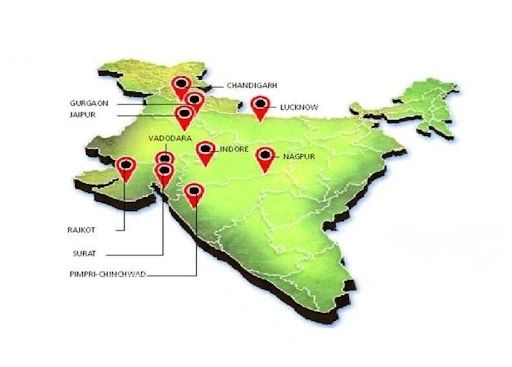
Tier 2 and Tier 3 e-commerce growth in India is now the primary driver of expansion for the Indian e-commerce market. As digital adoption accelerates beyond metros, non-metro markets account for the majority of new user acquisition and order volumes. Despite improvements in logistics and rising brand awareness, price sensitivity remains the dominant structural driver of scale in Tier 2 and Tier 3 India.
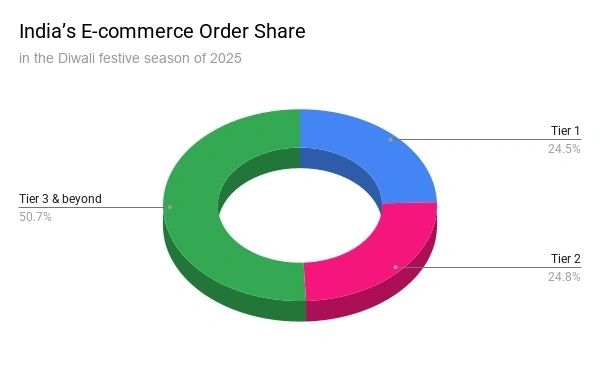
India’s e-commerce growth story is no longer limited to metros. Over the past few years, Tier 2 and Tier 3 cities have become the primary drivers of new user growth for online marketplaces. By 2025, non-metro markets had accounted for the majority of order volumes during peak seasons. Recent festive logistics data highlights just how important smaller cities have become for online retail. As shown in the chart below, the combined share of non-metro markets accounted to 74.7% of total order volume in the Diwali 2025 festive sales (Voice of Lapaas, 2025).
Even as internet access improves and more people shop online, one factor continues to influence buying decisions more than anything else: price. Brand reputation, fast delivery and smooth user experience do matter but in many cases, shoppers still choose the option that offers the best value for money.
Income Sensitivity and Value Orientation
Disposable incomes in Tier 2 and Tier 3 cities are typically lower than in Tier 1 metros and people tend to be more careful about how they spend online. According to consumer research, 54% of shoppers in Tier 2, 3 and 4 cities prefer deals and discounts over faster delivery (PwC India, 2024).
Another study by CMR found that consumers in Tier 2 cities spend roughly 16% of their income on online shopping, with many of those purchases heavily influenced by perceived value and discounts (Business Standard, 2023).
Consumers in these markets allocate a higher share of income to essentials. Discretionary spending is calculated and deliberate. As a result:
- Shoppers compare prices across platforms before purchasing
- Discount-led events drive traffic spikes
- Cashback and coupon strategies significantly influence conversion
First-Time Online Shoppers Prioritise Risk Mitigation
A significant percentage of shoppers in Tier 2 and Tier 3 cities are relatively new to online purchasing. By 2025, around 60% of new online shoppers entering India’s e-commerce ecosystem come from Tier 2 and Tier 3 cities (Ecom Digest, 2025).
For many of these customers, online shopping is still a relatively new experience. For them, lower prices reduce perceived risk. A competitively priced product makes experimentation easier. If the experience fails expectations, the financial impact is relatively small.
This risk-reduction mindset explains the strong growth of budget fashion brands, entry-level smartphones, private labels with aggressive pricing, COD orders for lower-ticket items.
Cash on Delivery continues to hold a larger share in non-metro markets than in metro cities, as it reduces trust concerns for the buyer. (Business Standard, 2024).
Logistics Infrastructure and E-Commerce Growth in Non-Metro India
Delivery timelines in Tier 2 and Tier 3 cities are improving but logistics density remains more concentrated in Tier 1 hubs. Seasonal performance data in 2025 showed that e-commerce orders from Tier 3 cities recorded 21% year-on-year growth, reflecting rising demand despite infrastructure gaps (New Indian Express, 2025).
When delivery speed differences are minimal or predictable, price comes out as the key differentiating factor.
This dynamic has led many platforms to:
- Promote low-cost shipping or free shipping thresholds
- Bundle discounts with prepaid offers
- Highlight “lowest price” badges prominently in UI
The Rise of Value-Focused E-Commerce Marketplaces
The rapid expansion of platforms targeting value-conscious consumers reinforces the pricing narrative. Non-metro India now contributes nearly three-quarters of festive order volume, reflecting the dominance of price-conscious segments (Voice of Lapaas, 2025).
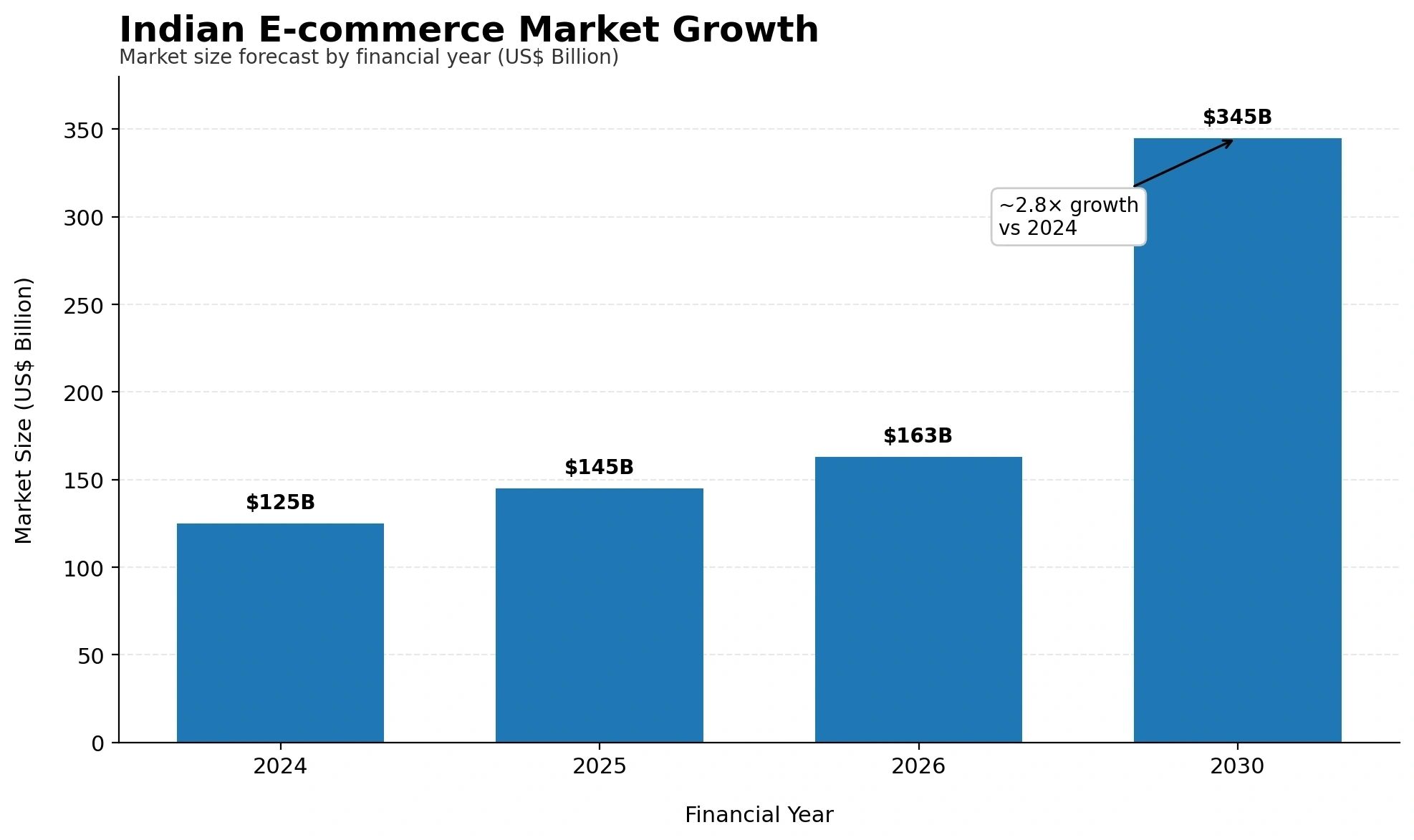
India’s overall e-commerce market was valued at approximately US$125 billion in 2024 and is projected to reach US$345 billion by 2030, with Tier 2 and Tier 3 adoption contributing significantly to that growth (IBEF, 2025).
These platforms continue to invest heavily in:
- Direct-from-manufacturer sourcing
- Private labels with controlled margins
- Data-driven discounting models
The strategy aligns with the economic profile of non-metro consumers.
Social Proof Amplifies Price Sensitivity
In smaller cities, buying decisions are often influenced by recommendations, community validation and word-of-mouth. Social commerce and regional influencer ecosystems are expanding rapidly in non-metro India (Bain & Company, 2025).
Because of this, good deals tend to spread fast. Discounts and offers often circulate quickly across WhatsApp groups and short-video platforms. This creates:
- Short buying windows
- Flash-sale driven conversions
- Spike-based traffic patterns
Brands that fail to participate in competitive pricing cycles lose visibility in these organic sharing networks.
Value Framing Dominates Over Brand Aspiration
It would be inaccurate to assume that consumers in Tier 2 and Tier 3 cities do not care about brands. Smartphone adoption, OTT subscriptions and discovery of new D2C brands show rising sophistication. However, final purchasing decisions remain majorly value-driven.
Market data indicates that budget and mid-range smartphones continue to dominate shipment volumes in India, particularly in non-metro regions (Counterpoint Research, 2025).
This value framing results in patterns like:
- Choosing discounted previous-generation models
- Purchasing branded apparel during sale seasons
- Opting for EMI on higher-ticket items
Consumers in these markets are willing to spend but they prefer to look for maximum value from every purchase.
Case Example: Smartphone Sales in Non-Metro India
As of 2025, India remains one of the largest global smartphone markets. Budget and mid-range devices under ₹15,000 continue to account for a substantial share of total shipments (Counterpoint Research, 2025).
Seasonal sales events show strong traction from Tier 2 and Tier 3 pin codes, reinforcing the importance of aggressive pricing and exchange bonuses (New Indian Express, 2025).
The data reflects a consistent pattern: price-led positioning drives volume scale in non-metro India.
Strategic Implications for E-Commerce Brands Targeting Tier 2 and Tier 3 India
To succeed in Tier 2 and Tier 3 markets, brands must align with price sensitivity without eroding long-term profitability.
Key approaches include:
- Private label expansion to improve margin control
- Dynamic pricing engines based on regional demand signals
- Bundling strategies instead of pure discounting
- Transparent pricing to build trust
- Smaller pack sizes to lower entry price
McKinsey’s analysis of emerging market consumers suggests that affordability innovation is critical for scale in value-sensitive segments. (McKinsey & Company, 2025).
Conclusion
Tier 2 and Tier 3 cities have clearly emerged as the next major growth engine for Indian e-commerce. Internet access is expanding, logistics networks are improving and consumers are becoming more comfortable with digital shopping. Even with these changes, price still plays a decisive role in shaping purchasing behaviour.
- 74.7% of festive order volume now originates from non-metro markets
- 60% of new shoppers come from these regions
- Tier 3 cities are growing at 21% year-on-year
- 54% of consumers prioritise deals over delivery speed
Together, these patterns point to a broader structural reality. Factors like income sensitivity, first-time buyer behaviour, infrastructure limitations and social sharing of deals all reinforce the importance of competitive pricing.
For brands entering these markets, recognising this dynamic can lead to more effective go-to-market strategies. In non-metro India, price is a core driver of scale and adoption, not just a short-term promotional strategy.
FAQs
1. Why are Tier 2 and Tier 3 cities driving e-commerce growth in India?
Tier 2 and Tier 3 cities are becoming the main growth drivers for India’s e-commerce market. Digital adoption is increasing quickly in these regions, smartphone access is expanding and logistics networks are gradually improving. At the same time, many metro markets are approaching saturation. As a result, a large share of new online shoppers and a significant portion of festive order volumes are now coming from non-metro India.
2. Why is price sensitivity higher in Tier 2 and Tier 3 e-commerce markets?
Price sensitivity in Tier 2 and Tier 3 India is driven by lower average disposable incomes, higher allocation of income toward essentials and a larger base of first-time online shoppers. Consumers in these markets actively compare prices across platforms, respond strongly to discounts and cashback offers and often prioritise value over delivery speed. As a result, competitive pricing remains the most powerful acquisition and conversion lever in non-metro e-commerce markets.
3. How should brands design pricing strategies for Tier 2 and Tier 3 consumers?
Brands that want to succeed in these markets usually focus on value-driven pricing strategies. This can include introducing private labels, offering smaller pack sizes, using dynamic pricing based on regional demand and creating bundle offers instead of relying solely on deep discounts. The goal is to remain price-competitive while protecting margins.
4. What role does Cash on Delivery (COD) play in non-metro e-commerce growth?
Cash on Delivery (COD) remains an important payment option in Tier 2 and Tier 3 markets because it helps build trust among customers who may be new to online shopping. By allowing customers to pay only after receiving their order, COD reduces perceived risk and encourages more people to try e-commerce for the first time. While prepaid adoption is increasing, COD remains an important driver of conversion rates in non-metro India, particularly for lower-ticket items and new customers.
Links
- https://voice.lapaas.com/tier3-cities-over-50-online-diwali-sales-2025/
- https://www.pwc.in/press-releases/2024/50-of-urban-dwellers-value-quick-delivery-while-54-of-consumers-in-tier-2-3-and-4-cities-value-deals-and-offers-more-pwc-india-report.html
- https://www.business-standard.com/economy/news/tier-2-city-consumers-spend-16-of-income-shopping-online-cmr-study-123062700146_1.html
- https://ecomdigest.in/micro-trends/small-business-lead-generation-2
- https://www.business-standard.com/amp/industry/news/tier-ii-and-tier-iii-cities-fuel-festive-season-sales-clickpost-report-124110501316_1.html
- https://www.newindianexpress.com/business/2025/Jul/03/e-commerce-sales-in-tier-3-cities-surge-21-yoy
- https://www.ibef.org/industry/ecommerce
- https://www.bain.com/insights/advertising-in-the-digital-age-in-india-and-around-the-world/
- https://counterpointresearch.com/en/insights/india-smartphone-market-q2-2025
- https://www.mckinsey.com/industries/consumer-packaged-goods/our-insights/state-of-consumer
Get the next one in your inbox.
No spam - just occasional notes on the new commerce stack.